GLP-1 Needle and Syringe Sizing Guide: Mounjaro, Ozempic, Wegovy and Compounded Vials
By Angel
Director, meeco Servicios Globales S.L.
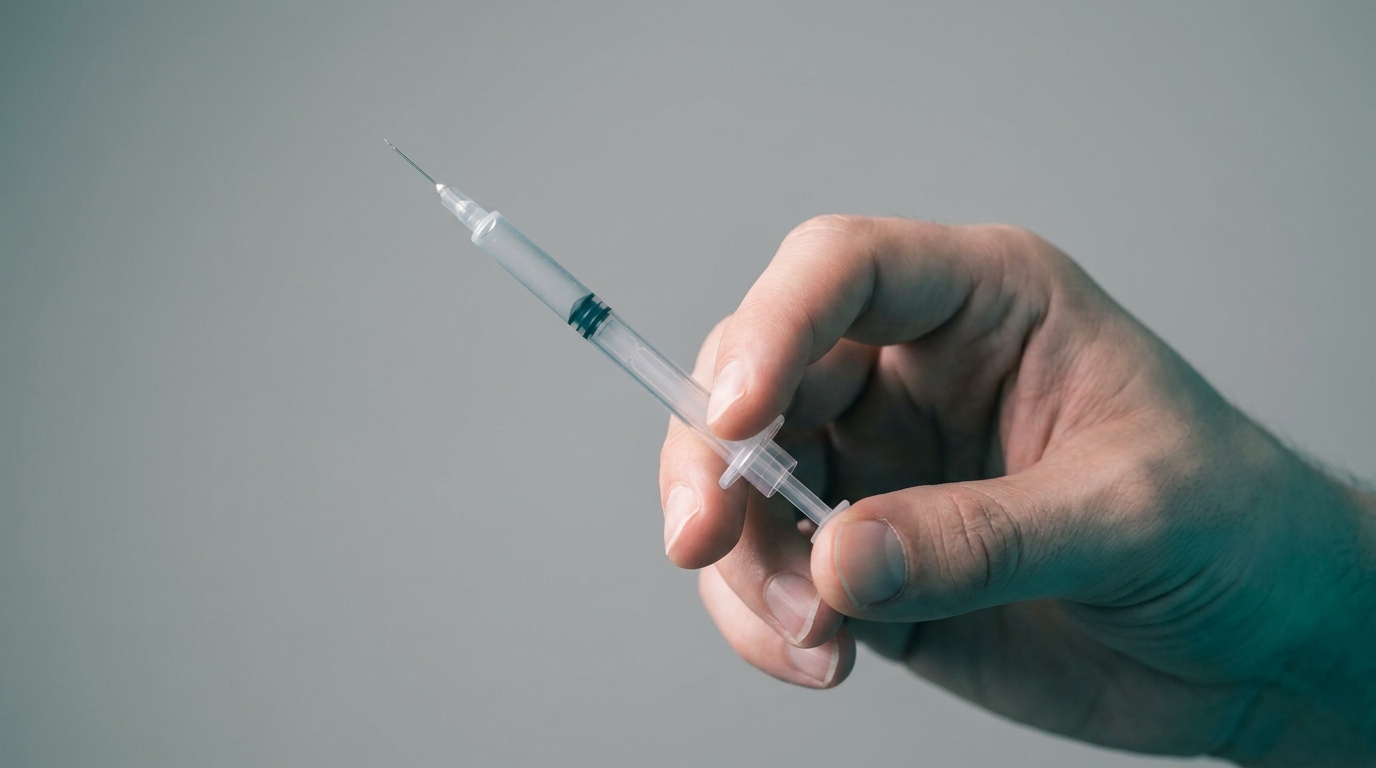
If you have ever stood in front of a chemist's shelf trying to work out what needle actually fits a Mounjaro pen, you are not alone. The question of "what needle for Mounjaro" or "what syringe size for Wegovy" comes up thousands of times a month in the UK, and the answer depends less on the brand on the box and more on whether you are holding a pre-filled pen or a vial drawn at a compounding pharmacy.
This guide walks through what changes when, what gauge and length tend to be appropriate for subcutaneous self-injection, and how to put together a travel kit that does not get you stopped at security. None of this is a substitute for advice from your prescriber — it is supplies-and-procedure information for people who already have a prescription and want to understand the kit side of it.
Why this question matters more now than it did two years ago
Until recently, the answer was simple: if you were on a GLP-1, you used the manufacturer's pen and the manufacturer's pen needles. The whole system was integrated, and there was very little to think about beyond ordering the next pack.
That has changed for two reasons. The first is supply. Pre-filled pens for tirzepatide and semaglutide have spent long stretches on the UK shortage list since 2024, and patients have increasingly been prescribed compounded vials by private clinics — which are drawn with an ordinary insulin syringe, not a pen needle. The second reason is travel. Pen cartridges are temperature-sensitive, and people travelling for more than a couple of days quickly discover that a thin insulated wallet does not keep a pen at the right temperature for a long-haul flight or a week in southern Europe in August. A proper cooling case becomes the difference between an effective dose and a wasted one.
So the practical question splits into two: what does your delivery method actually look like, and what kit do you need to support it on the road as well as at home?
Pre-filled pen versus vial-and-syringe
A pre-filled pen — the format used for branded Mounjaro (tirzepatide), Ozempic and Wegovy (semaglutide) — is essentially a calibrated cartridge with a dose dial. You attach a single-use pen needle to the threaded tip, dial the dose your prescriber has set, and inject. The pen itself controls the volume; you never see or measure the liquid. Pen needles for these systems are almost always 4 mm or 5 mm in length and 30G to 32G in gauge, and the manufacturer's instructions for use will specify a compatible standard (NovoFine, BD Micro-Fine and similar are widely interchangeable for the universal Luer-style pens, though always check your specific device).
A vial-and-syringe setup — the format used for compounded GLP-1 prescriptions from many private clinics — is the older, more manual approach. The medication sits in a stoppered glass vial. You wipe the stopper with an alcohol prep pad, draw the prescribed volume into a small insulin syringe, and inject subcutaneously. Here the syringe and needle are a single integrated unit, and you choose the gauge and length yourself based on what your prescriber recommends for the volume and tissue depth. Most people end up on a 0.3 mL or 0.5 mL insulin syringe with a 29G to 31G needle.
Neither format is "better" — they are different products of different supply chains. What matters is matching the kit to the format you have actually been prescribed.
Recommended needle gauge and length for subcutaneous self-injection
For subcutaneous injection in the abdomen, thigh or upper arm — which is the route used for all GLP-1 medications — the consensus across diabetes nursing guidance in the UK and Europe is that shorter, finer needles are appropriate for almost all adults. Specifically, 4 mm to 8 mm in length and 29G to 32G in gauge cover the overwhelming majority of self-injection scenarios.
Shorter needles (4 mm to 6 mm) deliver the dose into the subcutaneous fat layer reliably without going into muscle, even in lean adults, and they are noticeably more comfortable. Finer gauges (a higher number means a thinner needle — 32G is finer than 29G) hurt less and bruise less, but they also flow more slowly, which matters when you are drawing a thicker liquid from a vial. Most people find a 29G or 30G a good compromise for vial draw, and a 31G or 32G ideal for the actual injection if they are willing to use a separate draw needle. For pen users, the pen needle handles both jobs in one, and a 4 mm 32G is the modern default.
You can browse a full range at our insulin syringes page, which carries 29G, 30G and 31G options in 0.3 mL and 0.5 mL sizes.
Brand-by-brand: what the actual kit looks like
For Mounjaro (tirzepatide) branded pens, you need pen needles compatible with the KwikPen-style device — typically 4 mm or 5 mm at 32G. The pen does the dosing; you do not need a separate syringe. If your prescription is for a compounded tirzepatide vial from a UK or EU clinic, you will instead need a 0.3 mL or 0.5 mL insulin syringe in 29G to 31G, and your prescriber will tell you what volume corresponds to your dose.
For Ozempic and Wegovy (semaglutide) branded pens, the situation is similar — these are pen-based delivery systems and use 4 mm or 5 mm pen needles. Wegovy in particular ships with pre-attached needles in some markets, in which case you do not need to buy separate ones at all. Compounded semaglutide vials, again, use insulin syringes; the volumes are typically very small (0.1 mL to 0.3 mL), which is why most clinics recommend 0.3 mL syringes with 0.5-unit graduations for accurate dosing.
For compounded GLP-1 prescriptions in general, the volume per dose is usually under 0.5 mL, the medication is reasonably thin, and a 29G or 30G insulin syringe with a 5/16" or 1/2" needle works well. Always confirm with the clinic that has prescribed it — they will know the concentration and the volume per dose, and that determines the right syringe size for accurate measurement.
We do not stock or sell any of the medications above. What we sell is the supplies side: syringes, alcohol prep pads, sharps bins and travel kit. Dose questions belong with your prescriber or pharmacist.
Sharps disposal at home in the UK and EU
Once a needle has been used, it is a clinical sharp and cannot legally go in household waste in the UK or in any EU country. In the UK, if you have been prescribed an injectable medication on the NHS, your GP can arrange a free yellow sharps bin collection through your local council — the rules vary by council, but the entitlement is national. If you are self-funding (a private GLP-1 prescription, for example), most councils will charge a collection fee or expect you to drop the bin at a designated pharmacy or clinical waste site.
In Germany, used sharps go in a sealed puncture-proof container which can be returned to most pharmacies; in France the national DASTRI scheme provides free containers via pharmacies for prescribed self-injectors; in Spain and Italy the model is similar, with pharmacy or local health-authority take-back as the main route. The bin itself should meet BS EN ISO 23907-1 (the current single-use sharps container standard, which superseded BS 7320:1990) and UN 3291 for transport — any compliant home sharps bin sold in the UK and EU will state this on the label.
A 1 L bin is the right size for most monthly GLP-1 users; weekly or twice-weekly injectors can comfortably go a few months between disposals on that capacity. Browse our sharps bins page for compliant options.
Travel kit
The single biggest mistake people make travelling with a GLP-1 is underestimating how long their medication needs to stay cool. Pre-filled pens for tirzepatide and semaglutide need to be refrigerated (2-8°C) until first use, and even after first use most stay stable at room temperature only for a limited window — for example, the UK SmPCs allow up to 30 days at no more than 30°C for an in-use Mounjaro KwikPen, up to 56 days for an in-use Ozempic pen, and up to 28 days unrefrigerated for a Wegovy pre-filled pen. Always check the patient information leaflet for your specific brand. A short flight is fine in an insulated wallet; a week in a hot climate is not.
A proper insulated case with a phase-change cooling element keeps a pen in the right temperature window for 24 to 36 hours without active refrigeration, and reusable cases can be reactivated in any hotel fridge. We are launching a dedicated GLP-1 cooling case for exactly this — sized for the major pen formats and TSA/EU hand-luggage compliant. In the meantime, our travel kit bundles syringes, alcohol pads and a mini sharps container in a discreet zip case, so the supplies side of the trip is sorted even if the cooling element is not.
A note on flying: in both the UK and EU, you are entitled to carry medical injectables and the supplies to administer them in hand luggage, and you do not need a doctor's letter at most airports — but carrying a copy of your prescription in your phone is sensible if you are challenged. Wipe the vial or pen tip with a fresh alcohol prep pad before injecting in any non-domestic environment.
FAQ
What gauge needle for Mounjaro or Wegovy pens? For the standard pen format, 4 mm to 5 mm in length and 32G is the most common pen needle. For compounded vials of either drug, a 29G to 31G insulin syringe is more typical. Always confirm the specific recommendation with your prescriber.
How long should the needle be for subcutaneous injection? 4 mm to 8 mm covers almost all adults. Shorter needles are more comfortable and reduce the risk of accidentally injecting into muscle. The 4 mm pen needle has become the modern standard for exactly this reason.
Can I reuse a pen needle or insulin syringe? No. Both are designed for single use. Reusing a needle dulls the tip (which causes more pain and bruising), increases infection risk, and on a pen can cause dose inaccuracy. Use one per injection and dispose of it in a sharps bin immediately.
Where do I dispose of used needles in the UK? In a BS EN ISO 23907-1 / UN 3291-compliant sharps bin (this is the current single-use sharps container standard, replacing the older BS 7320:1990). NHS prescription users can usually request collection through their local council, often free of charge; private prescription users may pay a fee or use a pharmacy take-back scheme. Never put loose needles in household rubbish.
Do I need a cooling case for travel? For trips over 24 hours, yes — particularly in summer or in warm climates. A proper phase-change cooling case maintains the 2-8°C window pens require. For under 24 hours in cool conditions, an insulated wallet is usually sufficient, but check the specific stability data for your medication on the patient information leaflet.
This article is for general information only and is not medical advice. Always consult your prescriber or pharmacist for guidance specific to your situation.
Get your supplies
CE-marked syringes, alcohol prep pads, and bacteriostatic water. Shipped from Spain to all EU countries.