Bacteriostatic Water UK Guide: What It Is, How It's Used and Where to Buy
By Angel
Director, meeco Servicios Globales S.L.
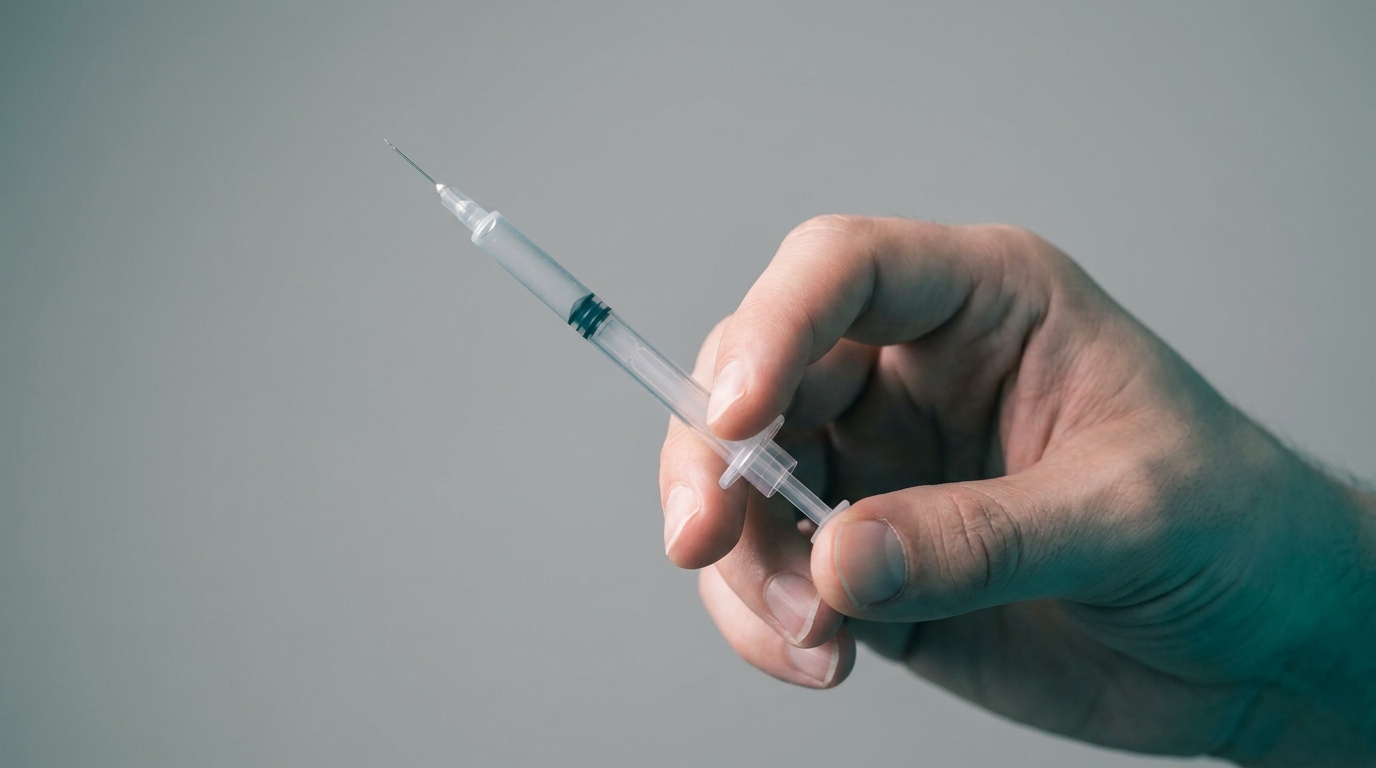
Bacteriostatic water is one of those products that almost nobody knows about until they suddenly need it — and then they need to understand it properly, because the difference between bacteriostatic water and ordinary sterile water for injection is the difference between a vial that lasts four weeks and a vial that should be discarded after one use. This guide covers what bac water actually is, what it is used for, the UK regulatory position, and the practical mechanics of using it for reconstitution.
We sell bacteriostatic water in 30 mL vials at injectkit.com/bacteriostatic-water. What follows is the context for using it correctly.
What bacteriostatic water actually is
Bacteriostatic water for injection is sterile water with 0.9% benzyl alcohol added as a preservative. The benzyl alcohol does not kill bacteria outright — it inhibits their growth, which is what "bacteriostatic" means. The practical consequence is that once a vial of bacteriostatic water is opened and the rubber stopper has been pierced with a needle, the preservative keeps the contents safe to use for up to 28 days, provided the vial is stored correctly and the stopper is wiped with an alcohol prep pad before each draw.
This is the entire point of the product. Without the preservative, any sterile water vial becomes a single-use item the moment it is breached — because bacteria from skin flora or environmental sources can be introduced through the stopper and multiply in the water over the days that follow. The benzyl alcohol gives you a multi-use vial that supports a small batch of reconstituted product over a reasonable timeframe.
It is worth saying clearly what bac water is not: it is not a treatment, not a medication, and not an active ingredient in anything. It is a sterile diluent.
How it differs from sterile water for injection
Sterile water for injection (often abbreviated WFI) is the same base material — pyrogen-free, USP-grade sterile water — but without the benzyl alcohol preservative. It comes in single-use ampoules, typically 5 mL or 10 mL, and is intended to be drawn up entirely in one preparation and the remainder discarded. WFI is the standard diluent in clinical settings where a dose is reconstituted, drawn and administered immediately, with no expectation that the vial will be revisited.
Bacteriostatic water, by contrast, is designed for the multi-dose case: a powdered product that needs to be reconstituted into a solution which will be drawn from over multiple days or weeks. The 30 mL multi-dose presentation is the most common format because it suits this use case — large enough to support several reconstitutions, small enough to be used within the 28-day post-puncture window.
There is one important caveat to flag for completeness: benzyl alcohol is contraindicated for neonates and is not recommended for very young infants, which is why paediatric reconstitutions in clinical settings typically use WFI instead. For adult self-administration this is not relevant, but it is the reason both products exist side by side in pharmacy stockrooms.
When and why it is used for reconstitution
Bacteriostatic water is used to dissolve a lyophilised (freeze-dried) powder back into an injectable solution. This applies to a fairly wide range of compounds. Vitamin B12 in its cyanocobalamin or hydroxocobalamin form is sometimes supplied as a powder for reconstitution. Various peptides used in research settings ship as powders that need to be brought into solution before they can be drawn into a syringe. Some hormone replacement preparations, certain biologics, and a number of compounded medications dispensed by private clinics arrive as powders for the same reason — powdered formulations are far more stable in shipping and storage than ready-mixed solutions, and the user reconstitutes them at the point of use.
In every case the principle is the same: you draw a measured volume of bacteriostatic water into a syringe, inject it slowly down the inside wall of the powder vial, swirl gently to dissolve (do not shake — most powders denature with vigorous agitation), and the resulting solution is now ready to draw doses from over the days and weeks that follow, as directed by your prescriber.
We do not endorse, recommend or sell any of the substances above. Bac water is a sterile supply; what you reconstitute with it is between you and your prescriber.
UK regulatory status
This is the question people ask most often, and the answer is more nuanced than a yes or no. Bacteriostatic water itself is not a controlled substance in the UK. It contains no active pharmaceutical ingredient, and it is not classified as a prescription-only medicine when sold for non-medicinal reconstitution use. It is widely available through medical-supply retailers in the UK and EU under standard consumer-supply rules, in the same category as syringes, alcohol prep pads and other sterile single-purpose items.
What matters is what you do with it. If you are reconstituting a prescription medication, the prescription medication itself is regulated — the bac water is not. If you are reconstituting a research compound or any substance that is not lawfully prescribed to you, the legal status of that substance applies. The diluent is incidental to the regulatory question; the active is the regulated item.
This is why bac water is freely sold in the UK, EU and most other jurisdictions while remaining a legitimate medical supply product. In UK clinical practice the standard injectable diluent is Water for Injections BP, and bacteriostatic water with benzyl alcohol is generally treated as a sterile supply rather than a medicine in its own right unless it is licensed for a specific indication.
How to use it: aseptic technique and basic mixing math
The procedure is straightforward but precision matters. Wash your hands. Wipe the stopper of both the bac water vial and the powder vial with separate fresh alcohol prep pads and let them air-dry for a few seconds — wet alcohol on a stopper can be drawn into the syringe and is unwanted. Draw your prescribed volume of bacteriostatic water into a sterile insulin syringe, making sure to first inject an equivalent volume of air into the bac water vial to equalise pressure (this avoids the vacuum that otherwise makes withdrawal awkward).
Inject the water slowly down the inside wall of the powder vial — do not blast it directly onto the powder cake. Roll or swirl the vial gently between your palms until the powder fully dissolves. The solution should be clear; cloudiness or undissolved particles are a sign that something has gone wrong and the vial should be set aside for review with your prescriber.
For repeat draws over the following days, our upcoming vial adapters make the process much cleaner — they sit on top of the vial and provide a luer-lock port that you connect a fresh syringe to, eliminating the repeated stopper punctures that gradually compromise the seal.
The mixing math is concentration-driven. If you reconstitute a 5 mg powder vial with 2 mL of bac water, you have a solution at 2.5 mg per mL — so a 0.4 mL draw delivers 1 mg. If you reconstitute the same 5 mg vial with 1 mL of bac water, the solution is 5 mg per mL — so a 0.2 mL draw delivers 1 mg. The total amount of active ingredient in the vial is unchanged; only the concentration changes with the volume of diluent. Your prescriber will tell you the target concentration and the corresponding draw volume.
Storage and shelf-life after reconstitution
An unopened bac water vial is shelf-stable at room temperature for the period stated on the label, which is typically 18 to 24 months from manufacture. Once the stopper is pierced, the vial is good for up to 28 days provided it is kept refrigerated (2-8°C) and the stopper is wiped with alcohol before each access. After 28 days, the contents should be discarded regardless of how much remains.
Reconstituted product has its own stability window which depends entirely on the substance reconstituted, not on the bac water. A reconstituted peptide may be stable for two weeks under refrigeration; a reconstituted B12 preparation may be stable for considerably longer. The bac water provides the bacteriostatic baseline; the upper limit on shelf-life is set by the chemistry of the active ingredient.
Where to buy in the UK
We stock bacteriostatic water in 30 mL multi-dose vials, manufactured to UK and EU sterile-supply standards. Order at injectkit.com/bacteriostatic-water — same-day dispatch on weekday orders, discreet packaging, and free shipping above the standard threshold.
FAQ
Is bacteriostatic water the same as saline? No. Saline is sterile water with 0.9% sodium chloride — an isotonic salt solution used for irrigation, IV fluids and some injections. Bac water has 0.9% benzyl alcohol as a preservative and contains no salt. They are not interchangeable.
Can I use ordinary tap water or boiled water for reconstitution? No. Tap water and boiled water are not sterile and contain pyrogens that can cause serious adverse reactions if injected. Reconstitution requires a dedicated sterile diluent — bacteriostatic water or sterile water for injection — manufactured to pharmacopoeia standards.
How long does an opened bac water vial last? Up to 28 days from the first puncture, provided the vial is kept refrigerated and the stopper is wiped with alcohol before each access. Discard after 28 days regardless of remaining volume.
Do I need a prescription to buy bacteriostatic water in the UK? No. Bacteriostatic water is not a prescription-only medicine in the UK when sold as a sterile diluent. It is sold under standard medical-supply rules.
What size syringe do I draw bac water with? For most reconstitutions, a 1 mL or 3 mL insulin or luer-lock syringe with a 21G to 25G needle works well. The needle is large enough to draw quickly through the rubber stopper without coring it, and the syringe markings are fine enough for accurate measurement of small volumes.
This article is for general information only and is not medical advice. Always consult your prescriber or pharmacist for guidance specific to your situation.
Get your supplies
CE-marked syringes, alcohol prep pads, and bacteriostatic water. Shipped from Spain to all EU countries.